Big ambitions, bigger questions: Our takeaways from Reykjavik


Earlier this month, we spent a week in Reykjavík, Iceland, where two very different gatherings offered a glimpse of where the conversation about SRM may be heading.
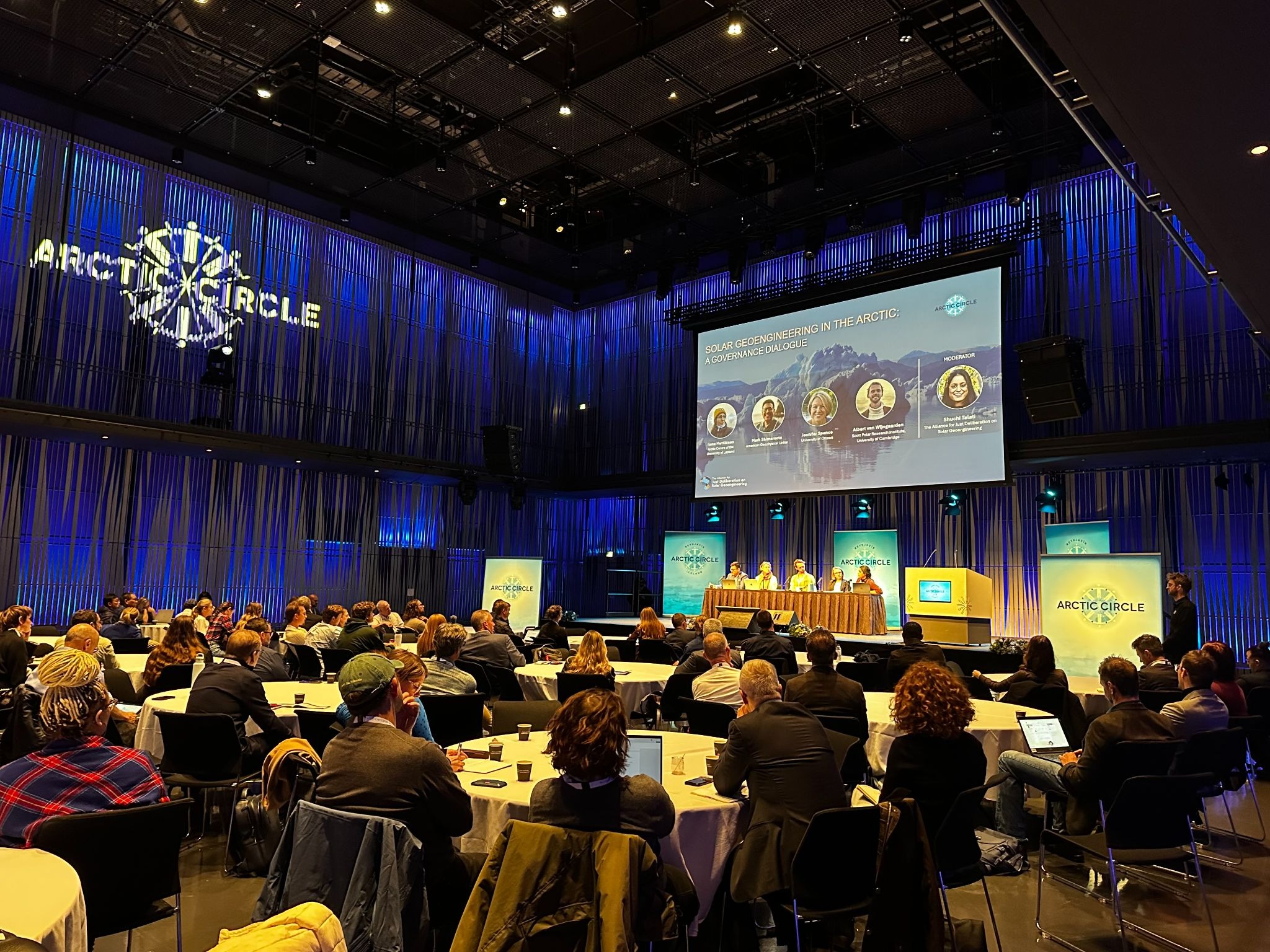
At the Arctic Circle Assembly, thousands of people gathered to discuss the future of a region facing enormous environmental and political change. SRM was one issue among many, but interest was clearly growing, with at least six sessions touching on the subject, including DSG's standing-room-only discussion on SRM governance in the Arctic.
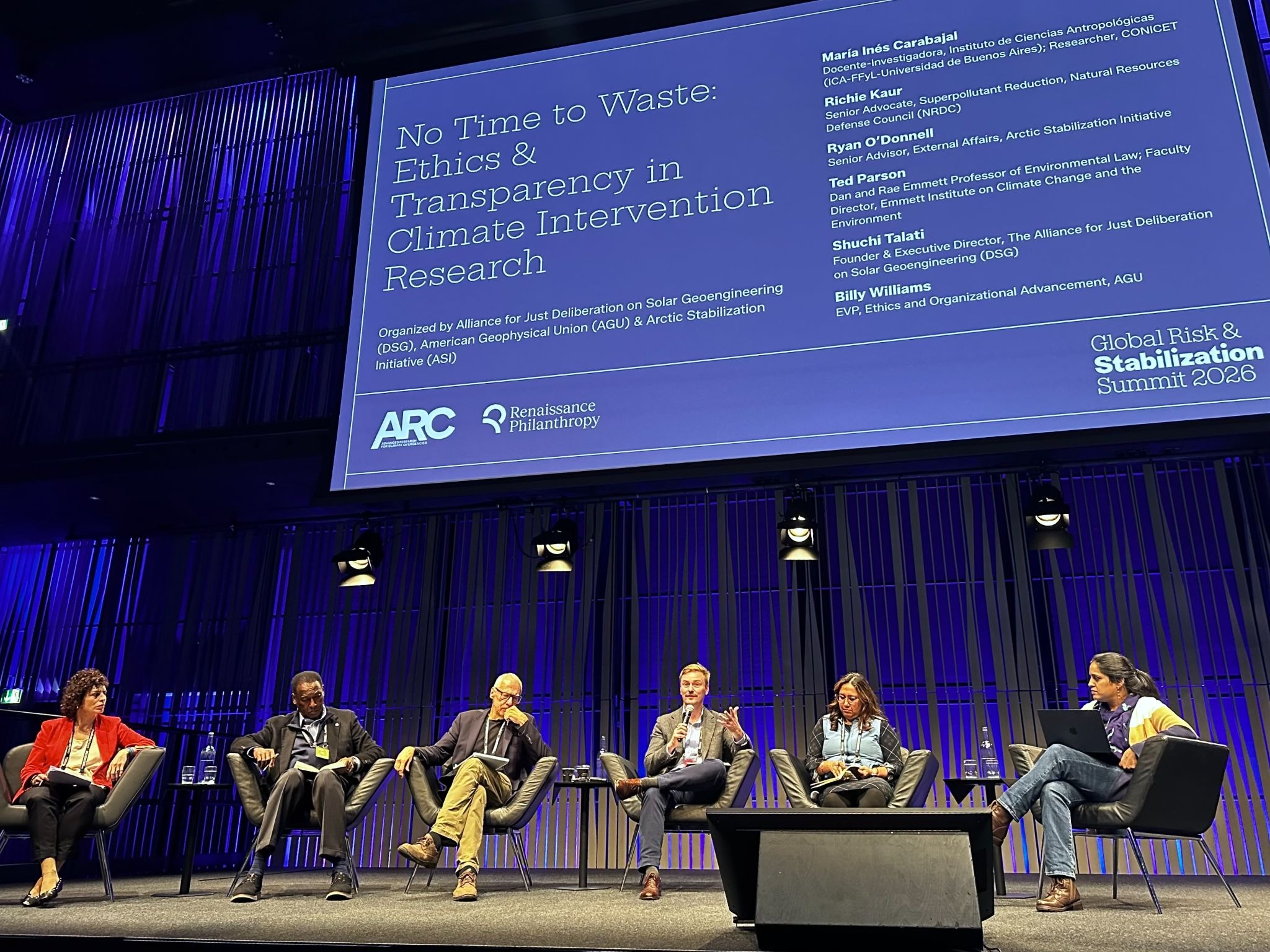
A few days later, the Global Risk and Stabilization Summit brought together researchers, policymakers, philanthropists, advocates, and organizations exploring proposed and emerging approaches to catastrophic climate risks. While “stabilization” may have been the stated goal (and is a term that is not agreed upon across the field), nearly every conversation seemed to lead back to SRM: the science, the geopolitical possibilities, the challenges of governance, and what the future of this field might look like. DSG co-hosted a session on ethics and transparency in research alongside the American Geophysical Union and the Arctic Stabilization Initiative, highlighting growing tensions between the need for credible research governance and pressure from some actors to accelerate the field with fewer constraints.
There was a palpable sense of momentum, both promising and concerning, with new voices entering the conversation and discussions about future SRM research becoming more concrete. Even for those who have worked on these issues for decades, the growing attention represented a significant shift.
But it also brought familiar tensions into sharper focus. Amid the excitement, we kept coming back to questions that have long been central to DSG's work: Who has a seat at the table? Whose priorities are setting the agenda? And are we building the governance needed to keep pace with its ambitions?
These questions are hardly new, but as the conversation accelerates and reaches more people and institutions who are considering what role they might play, they are more relevant than ever. The choices being made now will influence how the field develops for years to come, well before any decisions about deployment are on the table.
Here are three things that stood out to us in Reykjavik:
1. Who is in the room matters more now than ever
One of the strongest impressions from the Stabilization Summit was how quickly the field is widening. There is much to welcome in that shift — after all, better scientific understanding is essential to evaluating SRM’s potential risks and benefits, and a wider range of people engaging with the subject can bring fresh perspectives and challenge established assumptions.
But who is in the room depends on where the room is. There is a clear logic to discussing Arctic risks in Iceland, but Reykjavik is expensive and relatively difficult to reach for much of the world. Participants who were in the room from the Global South and climate-vulnerable communities made important contributions, bringing perspectives and experiences that sharpened and enriched the discussions, but they represented a small share of those present. Where a convening is held is a choice that shapes who can participate and whose voices are heard, regardless of who receives an invitation.
And the field is not widening evenly. New actors with significant financial and technical interests and resources are entering quickly, while those with the most at stake often lack the means to engage on equal terms. The conversations happening now will help shape research priorities, partnerships, and future governance approaches. Without deliberate effort to bring in perspectives from regions that may be affected by SRM but have historically had less influence over its development, this imbalance risks reinforcing longstanding inequalities in who sets priorities and makes decisions.
2. The Arctic is more than just tipping points
The Arctic featured prominently in conversations about earth systems stabilization, and for understandable reasons. Declining sea ice, thawing permafrost, and the risk of crossing critical climate thresholds are among the region's most urgent challenges.
But the Arctic is also home to communities and Indigenous peoples with their own histories, rights, and priorities. It has a long history of outside interests — among them scientific, commercial, and geopolitical — not all of which have served the people who live there.
At the Arctic Circle Assembly, these realities were central to the conversation. During DSG's session, participants raised questions about who should have authority, what meaningful participation and consent would look like, and how communities could influence decisions before research plans are already in motion. It also underscored that there is also no single Arctic perspective, and treating the region as one place with one set of interests risks overlooking the different experiences, priorities, and views of the people who live there. These considerations were less prominent at the Stabilization Summit that followed, where discussions focused more heavily on the technical and institutional dimensions of climate intervention research.
These concerns are explored in the recently published paper Geoengineering to Save the Arctic?, co-authored by DSG's Clara Botto following two workshops organized by the International Arctic Science Committee. The paper examines lessons from past injustices and the importance of respecting Indigenous rights and incorporating local knowledge into research decisions.
3. Making responsible research work
For DSG, these conversations reinforced something we've learned through engagement in other regions: meaningful participation takes time and requires an understanding of local contexts and relationships. That means it needs to begin well before major decisions have already been made. The Arctic may be a focus of growing scientific interest, but decisions about its future cannot be treated as questions for scientists alone.
One of the clearest takeaways from Reykjavik was the need to move beyond broad principles for responsible SRM research and make governance work in practice. There is already substantial agreement on the importance of transparency, scientific integrity, accountability, and public engagement. The harder challenge is translating those principles into clear expectations and processes that researchers and institutions can actually use, and that people outside those institutions can understand and scrutinize.
This is precisely what we're working to address through the Solar Geoengineering Research Governance Platform (SGRG), an initiative developed with partners including AGU, CEEW, and NRDC. SGRG is developing practical, voluntary tools to help researchers and institutions put responsible governance into practice, including guidance on research disclosure, independent scientific review, public engagement, and accountability. It’s an effort to establish shared expectations and make it easier to demonstrate whether research is being conducted responsibly.
As SRM research advances, these expectations need to become part of how projects are designed, funded, reviewed, and conducted. That will require institutions to adopt and test governance tools in real research settings, and to demonstrate that their commitments hold up when difficult decisions arise. The opportunity now is to build that infrastructure before research practices become entrenched, helping scientific progress proceed with credible oversight and public accountability.
We left Iceland with mixed feelings. On the one hand, we were encouraged by the range of people and institutions now engaging seriously with SRM, and by the willingness of many participants to grapple with difficult questions about its future. The conversations reflected genuine interest in improving scientific understanding and considering what responsible research and governance might require.
At the same time, we were concerned by the growing narrative around inevitability and the influence of technological and financial interests, which underscores the risk of consequential decisions before broader participation and legitimate governance are in place. The conversations reflected both meaningful progress and a troubling disconnect between the pace of interest in SRM and the capacity to govern it responsibly.
The future of SRM is being shaped now. The question is whether those with the greatest power and resources will continue to set its direction, or whether comparable investment in governance and broader participation will give others a meaningful say.
Join Our Community
Stay informed about the latest developments in solar geoengineering and how you can make a difference. Subscribe to our newsletter for insights, updates, and opportunities to get involved.
Latest Posts
Big ambitions, bigger questions: Our takeaways from Reykjavik

Before the Rules Catch Up: What AI’s Pace and Safety Challenges Mean for SRM Governance

New global dataset expands access to local-scale SRM modeling

Community Engagement in Solar Radiation Modification: Lessons from Two Models

Readiness Is Not a Destination: Lessons from a Cross-Sector Dialogue

SRM as a Tool for Climate Security: Competitive Framing and its (Geo)Political Implications