
Readiness Is Not a Destination: Lessons from a Cross-Sector Dialogue
.jpg)

Institutions worldwide are facing a convergence of pressures that are testing their ability to make decisions effectively. Climate disruption, geopolitical instability, technological acceleration, economic volatility, and declining public trust are straining existing systems and challenging assumptions about how collective decisions are made. At the same time, seemingly distinct issues—from artificial intelligence to solar geoengineering—are increasingly confronting similar governance questions: how to make decisions under uncertainty, maintain legitimacy, coordinate across fragmented institutions, and preserve public agency as conditions rapidly change.
Too often, efforts to address these challenges emerge only after important pathways have already begun to take shape, narrowing opportunities to influence their direction. This raises a fundamental question: what does it mean to be "ready" in a world defined by uncertainty and accelerating change?
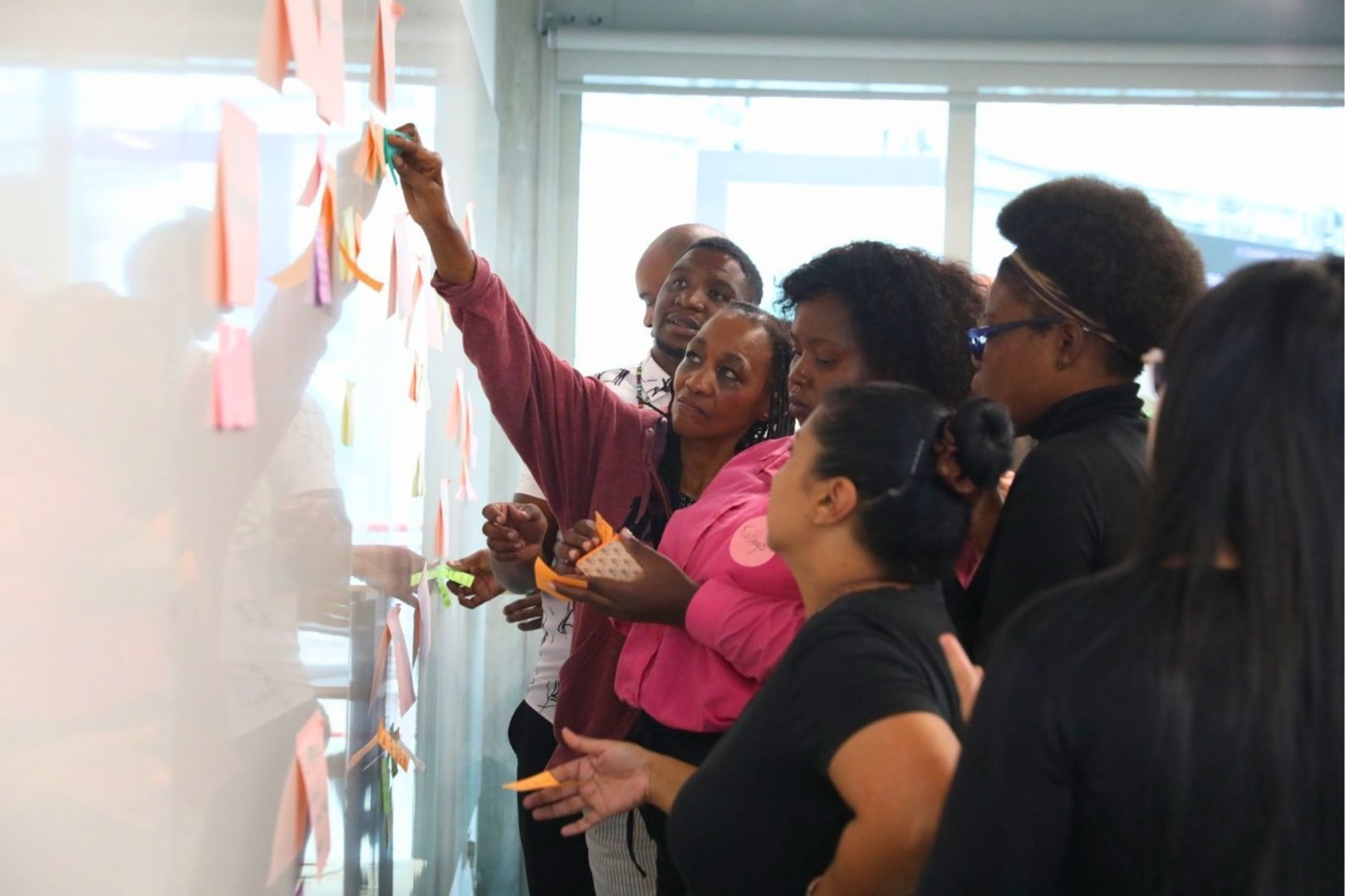
On June 8-9, the Alliance for Just Deliberation on Solar Geoengineering (DSG) and The Institutional Architecture Lab (TIAL) convened nearly twenty researchers and practitioners focusing on various fields, including AI, public health, energy systems, and climate interventions, for a focused cross-sector dialogue at American University in Washington, DC. Discussants explored the concept of “readiness” as a way of understanding the capacities institutions and societies need to recognize emerging pressures, adapt to changing conditions, coordinate responses, and retain meaningful agency under uncertainty. Through a combination of structured discussions, brief presentations drawing lessons from different fields, and breakout groups working through governance scenarios, participants explored what different domains might learn from one another.
The convening emerged from DSG’s SRM Governance Horizons initiative, which examines how political, financial, technological, and socio-cultural forces are shaping emerging SRM pathways. While the initiative is grounded in solar geoengineering, many of the governance questions it raises are not unique to SRM. Rather than looking only within the field, we wanted to step back and explore how other technologies and policy challenges are grappling with uncertainty, institutional strain, and rapid change. The cross-technology dialogue provided an opportunity to test and challenge our assumptions against the experiences of people working across a range of domains. In doing so, it opened a broader conversation about what readiness means, who needs it, and how it can be cultivated under conditions of uncertainty and change.
The Power & Purpose Behind Readiness
An early theme of the discussion, and one that resurfaced throughout the two days, centered on a deceptively simple set of questions: Who is ready? Who needs to be ready? And toward what end?
One of the clearest insights to emerge from the dialogue was that readiness is inseparable from purpose and intent. Institutions and societies are always building capacities for particular objectives, and those objectives shape both governance priorities and definitions of success. Efforts focused on accelerating innovation, minimizing harm, preserving legitimacy, protecting vulnerable communities, or strengthening resilience may all require different forms of readiness. As a result, discussions about readiness are ultimately discussions about values, priorities, and desired outcomes.
Power inevitably shapes who is ready for change and who can take advantage of moments of uncertainty. Many powerful actors are already well-positioned to shape outcomes through resources, expertise, and institutional access, while publics and communities may have fewer opportunities to shape emerging trajectories. The group also noted that these gaps are not always accidental. Some actors benefit from governance capacity staying weak, and one participant put the question directly: who benefits if governance stays weak? Seen this way, a governance vacuum is less a lag waiting to be closed than a condition that can be actively maintained, which makes it a feature of the landscape rather than simply another problem waiting to be solved.
A Trajectory, Not a Finish Line
This focus shifted the conversation away from thinking about governance primarily as a mechanism for enabling action and toward preserving agency. The role of readiness may be less about facilitating progress than ensuring that institutions and societies retain the ability to influence the direction of change under shifting and unpredictable circumstances. The ability to make meaningful choices about emerging technologies may ultimately matter just as much as the choices themselves.
From the very beginning, the idea of readiness as a finish line came under scrutiny. After all, institutions and societies rarely become fully ready before acting. Decisions are rarely made under ideal conditions, with complete information, unlimited time, and universal agreement. Waiting for perfect readiness may itself become a source of failure.
Instead, the conversation gravitated toward the idea of readiness as an ongoing orientation focused on sufficiency rather than perfection as technologies and the world around them evolve. Effective governance may depend less on comprehensive frameworks that promise certainty and more on having enough information, legitimacy, and capacity to act responsibly while remaining able to adapt as conditions change. Practical capabilities and careful sequencing may ultimately prove more valuable than attempts to eliminate uncertainty altogether. It also reframes the slowness of good public engagement as a feature to be protected rather than a bottleneck to be cleared, even as that slowness has to be reconciled with the faster pace of research and technological change.
A related caution was that readiness can be misdirected as easily as it can be missing. Being prepared for the wrong threat is its own failure mode. Participants recalled that after 9/11, households bought duct tape and plastic sheeting to guard against an ill-defined danger, a case in which a wrong-headed definition of what readiness required drove perverse investment. For an emerging field like solar geoengineering, the risk is not only being unprepared but organizing preparation around the wrong problem.
The Time Problem
Time itself emerged as a governance challenge in its own right. The dialogue drew important distinctions between readiness for acute crises and readiness for slow-moving pressures. Different challenges unfold over different timelines, sometimes resulting in cumulative harms or requiring long periods of institutional adjustment. Institutions and societies often struggle to operate across these overlapping temporal scales, naturally prioritizing the most immediate concerns.
Political and institutional cycles add another layer of complexity. Elections, leadership transitions, funding horizons, and shifting priorities create repeated resets that can make it difficult to maintain momentum while underlying challenges continue to evolve. Maintaining continuity may become just as important as responding quickly. An institution can react effectively to immediate events while slowly losing the institutional memory needed for long-term governance.
Insights from nuclear waste governance introduced particularly useful concepts for thinking about the time problem. In that domain, governance does not simply arrive late; it resets. Each new administration renames the governing idea, stages a fresh start, and leaves the underlying barriers in place, even as the surrounding legal architecture stays fixed. Concepts such as continuity capacity (the ability to prepare for, respond to, and recover from disruptions while maintaining essential functions and operations) and promissory legitimacy (the belief that an envisioned future state of the world is desirable and can plausibly be achieved by the measures taken) named these dynamics precisely, recognizing that some governance challenges require institutions to maintain authority, memory, and credibility across generations. Long-term governance success may depend as much on persistence and durability as on flexibility and speed.
The conversation also highlighted a broader tension. Governance discussions often focus on acting early enough to shape events, but acting too early can present challenges if institutions overcommit before evidence or public deliberation have matured. Readiness, therefore, requires not only knowing when to act but also understanding how to preserve options and maintain flexibility as circumstances evolve.
Trust, Legitimacy, and the Information Environment
Trust and legitimacy surfaced repeatedly throughout the dialogue, but the group agreed they should not be treated as interchangeable.
Trust tends to be personal and relational. Legitimacy, by contrast, allows institutions and decisions to function even where trust is uneven or contested. Governance systems cannot assume universal trust, particularly in polarized societies. Instead, they may need procedures and institutions that remain legitimate even among groups that disagree with particular outcomes.
A key insight was that formal institutions are only one source of governance authority. Trusted intermediaries, local organizations, professional communities, citizen scientists, and informal networks frequently play important governance roles, particularly where formal institutions are under strain or politically contested. Governance depends not only on institutional design but also on relationships and social infrastructure.
The discussion also expanded to consider information environments as governance challenges in their own right. Across sectors, the group identified monitoring, detection, attribution, and public legibility as essential capacities. Institutions and publics alike need reliable ways to understand what is happening and why, yet increasingly fragmented information systems make those tasks more difficult.
Importantly, the challenge extends beyond correcting false information. Misinformation communities often provide a sense of identity and belonging as much as they do inaccurate claims, while algorithmic systems reward speed and visibility over deliberation and verification. Governance has to function within contested information environments rather than assuming that consensus around basic facts can always be achieved.
What This Means for Solar Geoengineering
Although the dialogue explored governance across many domains, it also offered an opportunity to reflect on what these lessons might mean for solar geoengineering. Many participants who weren’t familiar with solar geoengineering observed that it appears to be in an important shaping moment. Research activity is expanding while governance institutions remain relatively underdeveloped, creating both risks and opportunities. Unlike many governance debates that begin only after technological pathways have hardened, this remains a period in which trajectories are still sufficiently open to informed public and institutional choice. That openness, however, sits on top of an unresolved disagreement about what the technology even is. As one participant framed it, the field has not settled whether solar geoengineering is the pandemic or the vaccine, and participants who assess it from different vantage points are not, in effect, readying themselves for the same thing.
One recurring theme was the need to move from principles to capabilities. Broad commitments to transparency, accountability, scientific integrity, and public engagement remain essential, but principles alone cannot govern research. They require practical institutions and governance infrastructure if they are to shape real-world decisions.
Building governance alongside research may therefore be one of the most important lessons to emerge from looking across technologies. Carbon removal served as the cautionary case: investment and field-building outran both governance and demand, in part because legitimacy and public understanding were treated as downstream add-ons rather than as work to be done in parallel with the science. Across domains, the value of investing early in shared norms, monitoring systems, trusted communication channels, engagement mechanisms, and accountability structures became increasingly apparent. Governance proved most effective when it developed in parallel with emerging activities rather than reacting after controversies had already narrowed available options.
Two developments gave that lesson particular urgency in solar geoengineering. The first is the arrival of private-sector actors, including the first for-profit company working in the field, which raised the prospect that a technology of global consequence could be shaped by one or a few firms before norms and guardrails are in place. The second is the distinct challenge of monitoring, detection, and attribution: detecting activity is relatively tractable, but attributing climatic effects is slow, baseline-dependent, and potentially a decade away, and attribution capacity is already being positioned commercially. Both point to the value of building shared monitoring and accountability infrastructure early, while the field is still small enough to influence.
The broader implication is that governance should not simply respond to technological change but help shape the conditions under which technological development unfolds. This does not mean eliminating uncertainty or preventing disagreement. It means building enough institutional capacity to navigate uncertainty without allowing the future to be determined by default.
Readiness as an Ongoing Practice
The cross-technology dialogue began with a relatively straightforward question: how do institutions prepare for emerging challenges?
By the end of two days, participants had become less interested in defining readiness than in understanding the practical capacities that make governance possible under conditions of uncertainty. Rather than identifying a universal framework, readiness increasingly came to be seen as a flexible orientation toward building relationships, institutions, and capabilities that can endure while remaining adaptable.
Many important questions remain open: What capacities should persist across political and technological change? What should remain flexible? How can governance preserve meaningful public agency while responding to emerging pressures? These questions do not have simple answers, nor are they unique.
Perhaps that was the most important lesson of the dialogue. Governance may be less about predicting the future than about ensuring that societies retain the ability to shape it. In an era of accelerating technological and political change, investing in the institutions, relationships, and practical capacities needed to navigate uncertainty may be one of the most important forms of readiness we can build.
Join Our Community
Stay informed about the latest developments in solar geoengineering and how you can make a difference. Subscribe to our newsletter for insights, updates, and opportunities to get involved.
Latest Posts
Community Engagement in Solar Radiation Modification: Lessons from Two Models
Readiness Is Not a Destination: Lessons from a Cross-Sector Dialogue

SRM as a Tool for Climate Security: Competitive Framing and its (Geo)Political Implications


Reading the Signals: Stardust and the Shape of an Emerging Field

.png)
From Taboo to Assumed: How Carbon Dioxide Removal Advanced Before Governance Could Keep Up and What It Means for SRM


The Danger of Performed Governance in SRM
