
Ocean Governance at the Edge of Climate Risk: Lessons from Bermuda

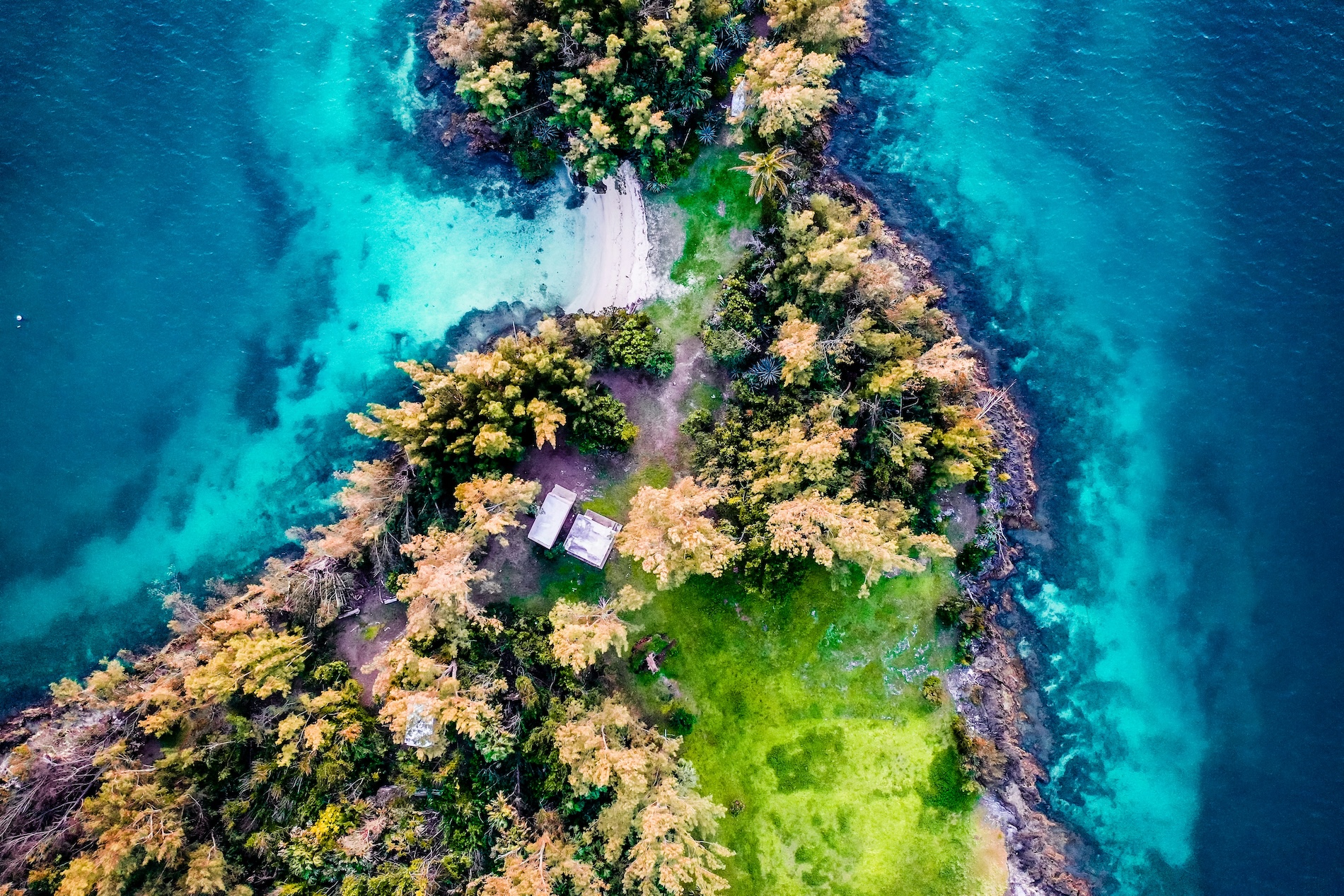
Last summer, the inaugural cohort of the Young Leaders in Ocean Governance Program (YLOG) came to life. Ideated and led by Ela Gökçiğdem, with the goal of creating a locally grounded but globally minded group of early-career professionals with a foundational understanding of the multidisciplinary mindset that ocean governance requires, DSG joined YLOG’s very first in-person meeting in Bermuda. YLOG provided a step forward in equipping the next generation of Bermudian leaders to restore our ocean, partnering with the Bermuda Institute of Ocean Sciences and bringing in leading climate finance experts to provide students with Masterclass sessions. As the blue economy’s relevance grows, it is crucial that we simultaneously build local capacity for the next generation workforce entering the field to pass the torch.
Understanding that any discussion about solar geoengineering (also called solar radiation modification or SRM) research or potential deployment may also bear impacts on marine biodiversity, coastal communities’ livelihoods, and arctic health amongst other issues, YLOG also integrated SRM into its curriculum. To help in this effort, DSG provided its Learning Resources for the students’ self learning module. In July, DSG’s Director of Outreach, Clara Botto, joined the group in person in Bermuda to run a climate futures workshop designed by Julie Reindl. Though this workshop had been run in an Arctic setting previously, this was the first time it was adapted to the island’s context. The students co-imagined futures where SRM was present (or absent) in different forms, and were challenged with questions such as: who decides to research it, who governs it, and whether they even see themselves in the bigger picture of governance at all.
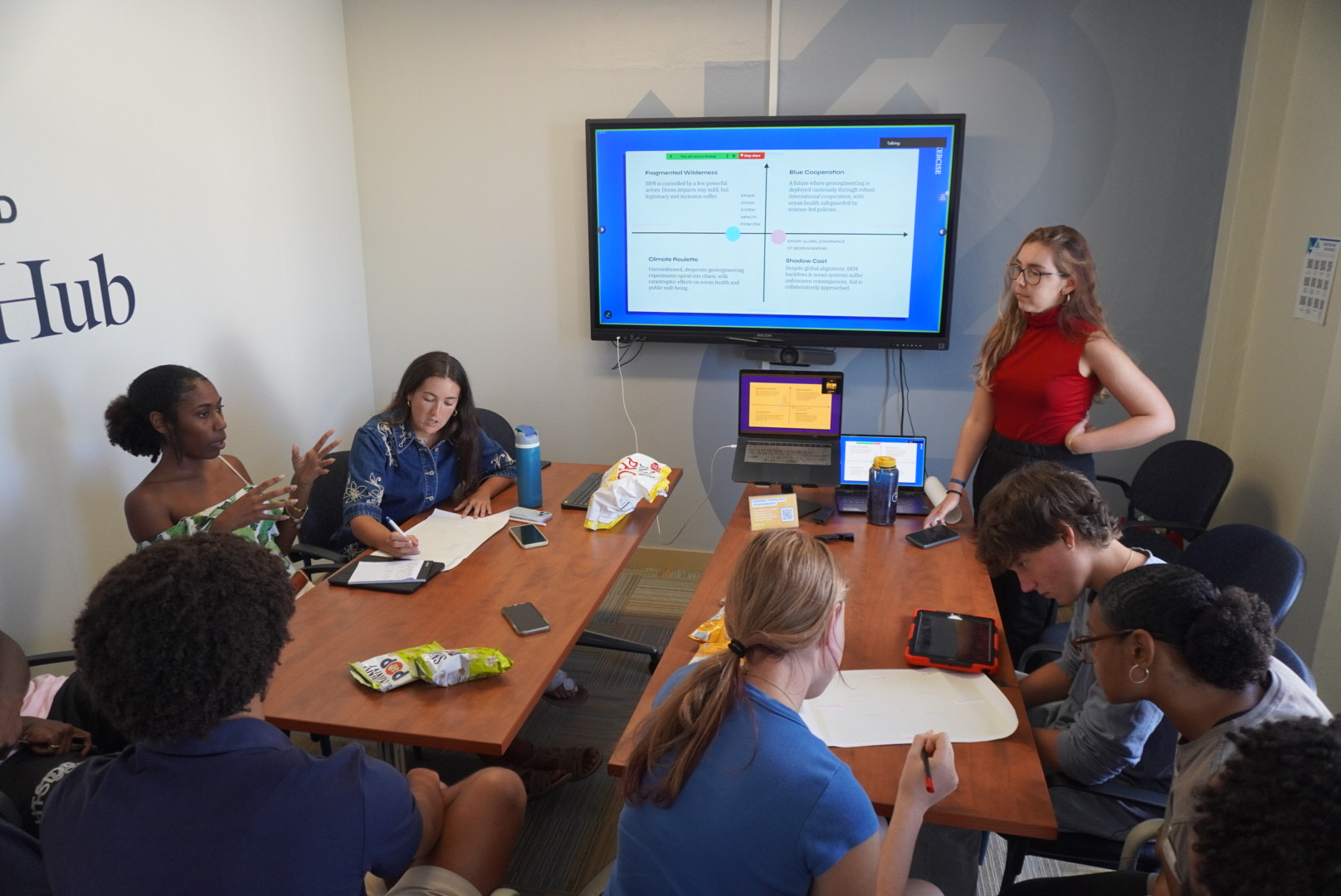
After this session, it was evident that the students had expanded their vision of the futures that will very likely impact day-to-day lives on their island and realized that everybody has a right to engage in deliberations about SRM. More importantly, given the scope of the YLOG program, students also thought about who would potentially be financing and insuring these mechanisms, and whether there’s even a proper way to integrate finance into these geoengineering pathways at all.
This session also sparked deeper questions around the role of insurance in managing the risks that come with large-scale geoengineering solutions. As technologies like SRM or marine carbon dioxide removal become more plausible, they bring with them new layers of financial uncertainty. Insurance becomes a critical piece of the puzzle: not just in protecting investments, but in shaping how risk is understood, priced, and ultimately governed. Bermuda, as one of the insurance capitals of the world, offered a unique vantage point for exploring this intersection. With over a third of global reinsurance capital based on the island, it is positioned to lead conversations around the kinds of parametric tools, risk-transfer models, and regulatory frameworks that could support or constrain the future of geoengineering. For our students, being in Bermuda meant they weren’t just learning theory; they were surrounded by the institutions that would directly shape how these approaches could be financed and de-risked on a global scale.
Surprisingly, the SRM field hasn’t yet talked much about the role the insurance sector should (or shouldn’t) play. Unsurprisingly, as is true for many workshops about SRM, we seemed to have more questions than answers. However, in Bermuda, we realised we’re lacking serious thought put into the responsibilities and accountability when insurance companies enter the SRM debate, especially given the fast developments of venture capital pouring into the field and future speculations about market interests.
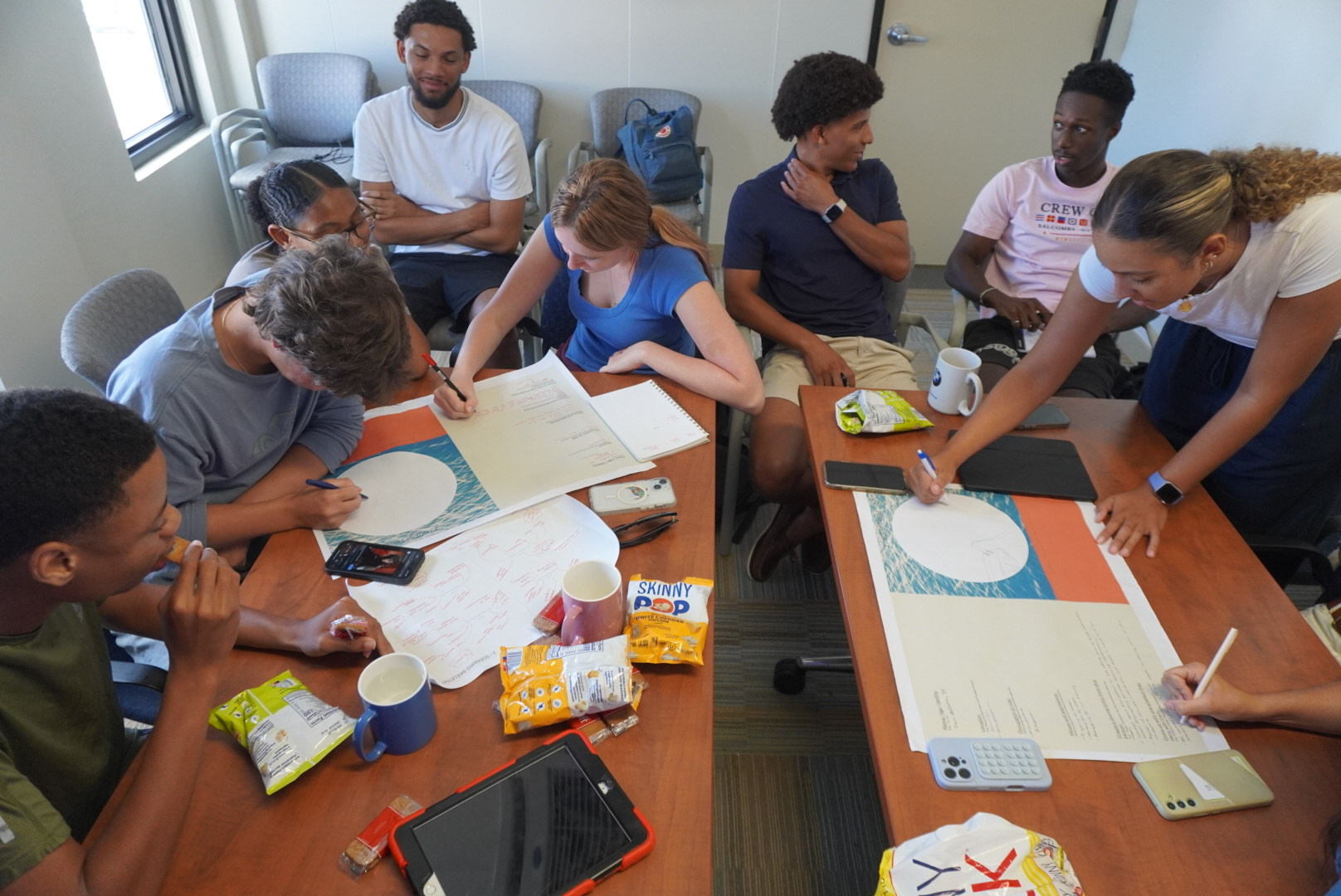
We saw firsthand that having students learn about these nuances prior to entering their careers has the power to change the quality and creativity of the solutions they bring to the table, and hopefully accelerate how quickly solutions are actually implemented. That’s what YLOG is working toward: building a foundation for this kind of thinking to not just exist, but to become expected. A future where students don’t stumble into ocean governance by accident, but enter it intentionally, with the skills and context to lead from day one. If we want to see lasting change in how the ocean is governed and financed, we need to start by teaching. The same should hold for solar geoengineering. We’ll keep on working to bring information and to help create the structures for agency for those whose futures are not simply impacted by conversations like these, but who have to confront the possibility of even having a future in their own lands.
Join Our Community
Stay informed about the latest developments in solar geoengineering and how you can make a difference. Subscribe to our newsletter for insights, updates, and opportunities to get involved.
Latest Posts
Community Engagement in Solar Radiation Modification: Lessons from Two Models
.jpg)

Readiness Is Not a Destination: Lessons from a Cross-Sector Dialogue

SRM as a Tool for Climate Security: Competitive Framing and its (Geo)Political Implications

Reading the Signals: Stardust and the Shape of an Emerging Field

.png)
From Taboo to Assumed: How Carbon Dioxide Removal Advanced Before Governance Could Keep Up and What It Means for SRM

The Danger of Performed Governance in SRM
