
Weather Modification vs. Solar Geoengineering
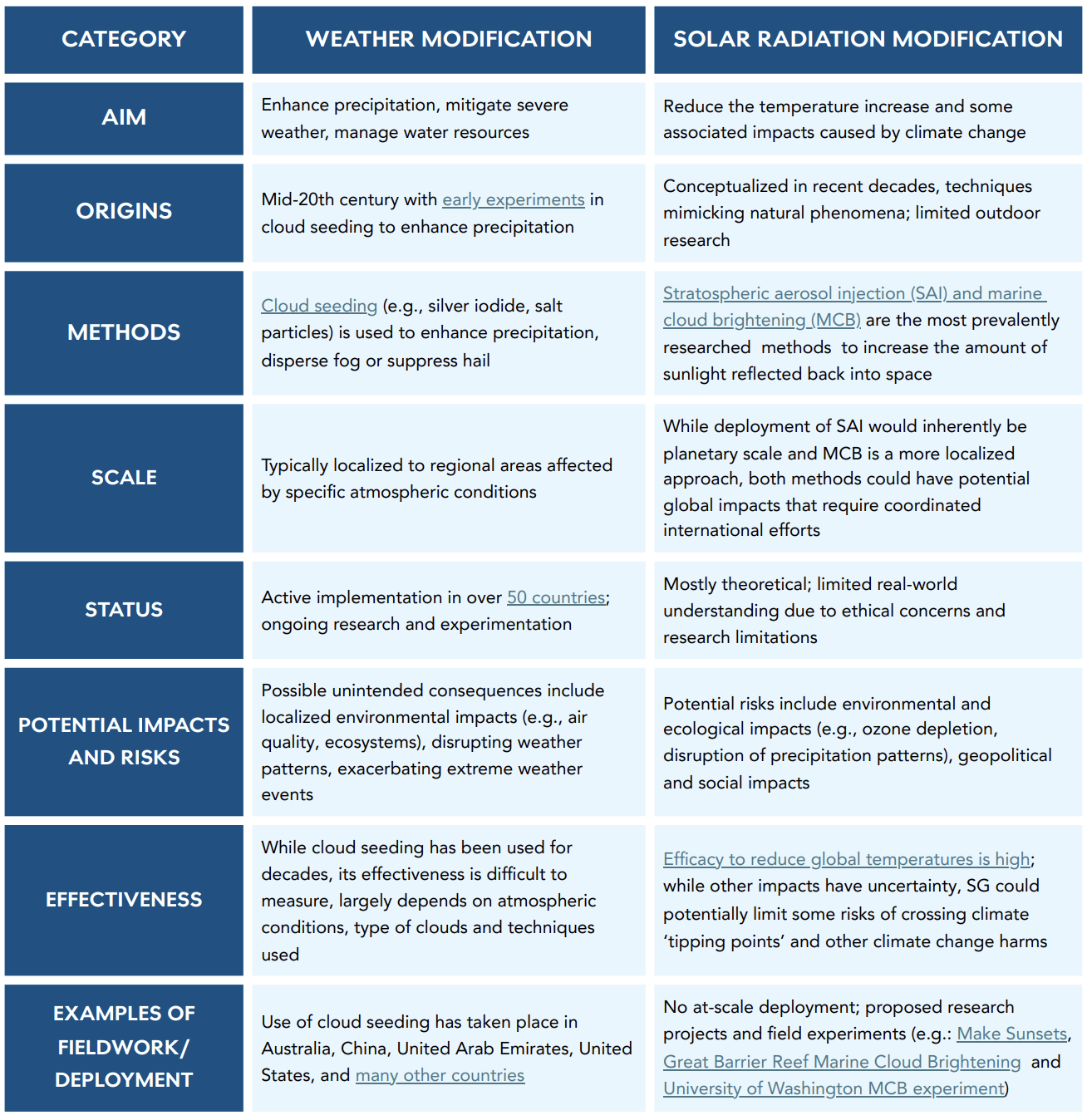
Despite sharing some similarities in potential outcomes, weather modification and solar radiation modification (SRM) differ significantly in their objectives, origins, methods, and potential impacts. This fact sheet aims to provide clarity by offering an overview of weather modification and distinguishing it from SRM. By understanding the nuances between these similar yet distinct approaches, stakeholders can better navigate discussions in these evolving areas.
Existing Governance
International weather modification governance:
Weather modification lacks comprehensive international governance frameworks, leading to a patchwork of regulations and guidelines at the national and regional levels. The World Meteorological Organization (WMO) provides guidance and recommendations on the scientific and technical aspects of weather modification practices. The organization promotes research, collaboration, and the exchange of information among member countries to advance understanding of weather modification techniques, their potential impacts, and best practices for their implementation.
National/state weather modification governance:
Some countries have established regulatory bodies to oversee weather modification activities and ensure adherence to safety and environmental standards. In China, for example, weather modification activities are regulated by the China Meteorological Administration (CMA) Weather Modification Center. In Australia, regulation of weather modification is managed by each state. The State of New South Wales (NSW), for example, Snowy Mountains Cloud Seeding Act of 2004 requires cloud seeding activities to be reported to NSW Environment Protection Authority (EPA) and relevant Ministers. In the United States, the Weather Modification Reporting Act of 1972 “requires that all persons that conduct non-Federal weather modification activities within the United States or its territories report such activities to the U.S. Secretary of Commerce at least 10 days prior to and after undertaking the activities.” The weather modification activities to be reported include cloud seeding and is now being applied to SRM.
International SRM governance:
While SRM remains largely theoretical with limited outdoor experimentation due to its complex and controversial nature and potential risks, research is quickly developing and private initiatives are gaining interest in this field. However, SRM currently lacks a robust policy framework on national or international scales. There are some existing global treaties or conventions that may apply to some aspects of SRM, but the lack of comprehensive regulation leaves a significant governance gap that needs to be addressed. Examples of existing governance that could be applied to SRM include the United Nations Convention on Biological Diversity (CBD) which issued a “de facto moratorium” on SRM activities that may affect biodiversity “(…) until there is an adequate scientific basis on which to justify such activities (…)”. Other international legal instruments, such as the United Nations Convention on the Law of the Sea (UNCLOS), only apply to MCB. The Vienna Convention on the Protection of the Ozone Layer and the 1987 Montreal Protocol, on the other hand, could be applicable to SAI because of its potential harm to the ozone layer. Additional international bodies are starting to engage with SRM in recent years, including the United Nations Environment Program, the UN Human Rights Council and United Nations Educational, Scientific and Cultural Organization (UNESCO).
Blurry Lines: Weather Modification, SRM, and Conspiracy Theories:
Since early 2025, several U.S. states have introduced or passed legislation aimed at prohibiting activities that would introduce chemicals into the atmosphere with the purpose of affecting temperature, weather, or the intensity of the sunlight, often citing both weather modification and SRM. These efforts reflect growing public concern fueled in part by misinformation and conspiracy theories (e.g., “chemtrails”) that conflate cloud seeding and SRM. The regulatory overlap— and the lack of clear public understanding — highlights the urgent need for accurate communication and policy clarity.
Conclusion
Given the overlapping risks, confusion and emerging legal responses to both weather modification and SRM, effective communication and robust governance are more critical than ever. Ensuring ethical, transparent, and informed decision making requires clearly distinguishing between these technologies while acknowledging their respective uncertainties and societal implications. As we navigate the complexities of SRM, building capacity and fostering science-based dialogue will be key to developing legitimate, inclusive, and globally coordinated responses. Only through responsible engagement can we ensure that decisions made today uphold the well-being of present and future generations and the sustainability of our planet.

Subscribe to our newsletter
Stay connected with DSG — get the latest news and insights delivered to your inbox.