
Understanding the Role of Aerosols
What Are Aerosols?
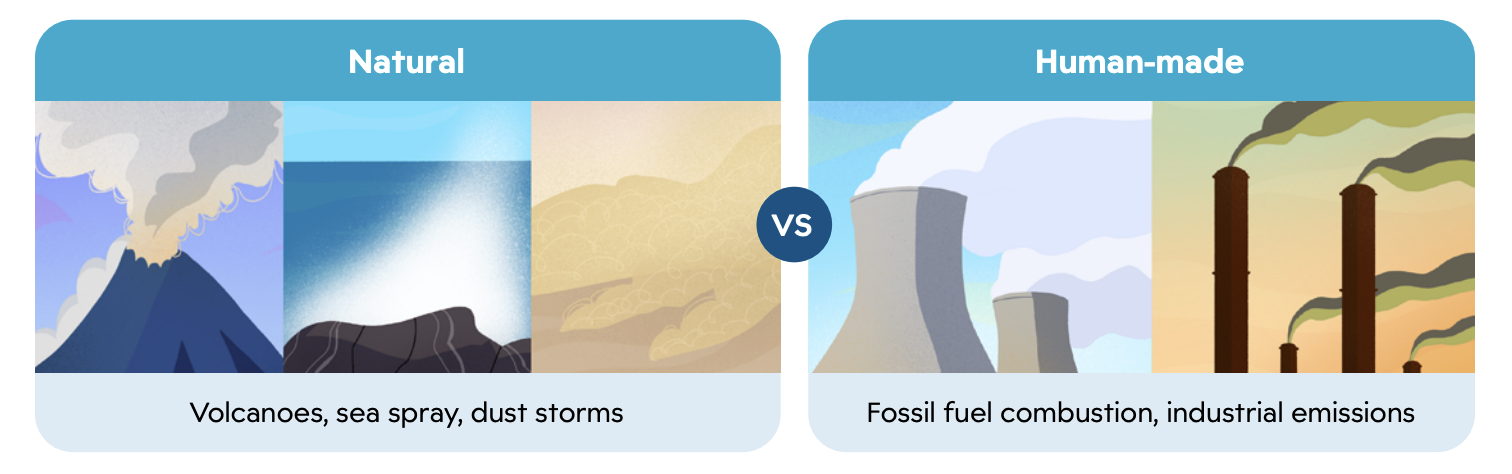
Aerosols are tiny solid or liquid particles suspended in the air, from natural sources like volcanoes, dust storms, and sea spray, as well as human activities such as burning fossil fuels and industry. They influence climate by interacting with sunlight and clouds, affecting temperature and weather patterns.
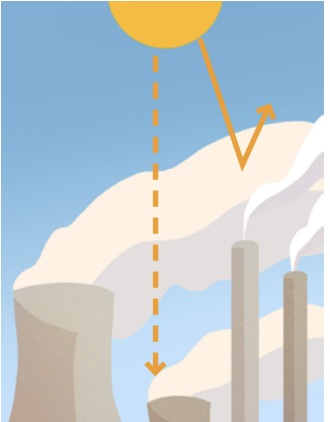
In solar geoengineering, aerosols are central to stratospheric aerosol injection (SAI), which involves releasing reflective particles into the stratosphere to reduce the amount of sunlight that reaches the Earth’s surface, cooling the planet.
How Do Aerosols Reflect Sunlight?
Aerosols affect sunlight in two key ways:
- Scattering Sunlight: Some aerosols scatter sunlight back into space, reducing the amount of solar energy absorbed by the Earth (SAI’s primary mechanism).
- Increasing Cloud Reflectivity: Aerosols can also act as cloud condensation nuclei, making clouds denser and brighter, enhancing reflectivity (basis of marine cloud brightening, or MCB).
Natural Inspiration: Volcanic Eruptions
Volcanoes show how aerosols can cool the planet. Mount Pinatubo’s 1991 eruption released 10million+ tons of sulfur dioxide (SO₂), forming sulfate aerosols that reflected sunlight, cooling the planet by about 0.5°C for nearly two years— a key inspiration for SAI.
Aerosols in Stratospheric Aerosol Injection (SAI)
SAI proposes to mimic volcanic eruptions by injecting reflective aerosols into the stratosphere. Key considerations include:
- Material Options: Sulfates are the most studied, but alternatives like calcium carbonate or diamond dust are being explored.
- Delivery Methods: High-altitude aircraft, balloons, or specialized equipment could release aerosols.
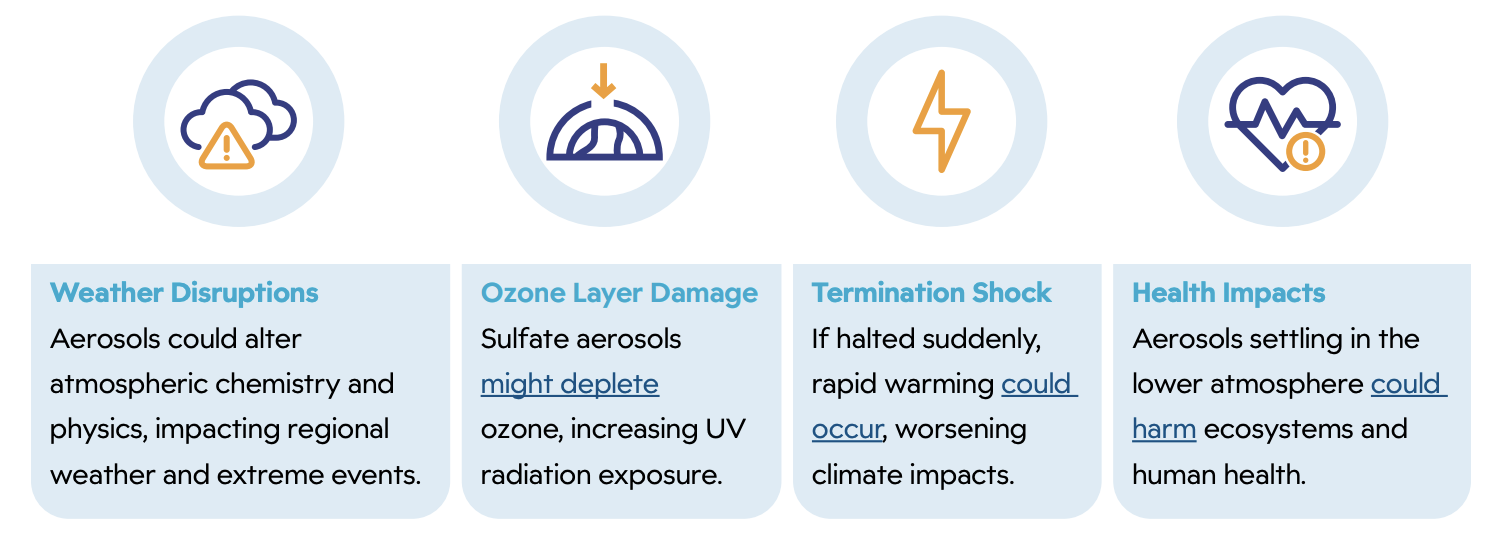
- Environmental and Human Toxicology Potential: Lifespan in the stratosphere, effects on ecosystems, and human health when they eventually wash back down to the Earth’s surface.

Potential Benefits of Aerosols in Geoengineering
- Rapid Cooling: Aerosols could reduce global temperatures within months.
- Global Reach: Stratospheric aerosols spread widely, providing uniform and consistent cooling.
- Delay Climate Tipping Points: They may prevent or slow catastrophic changes, like Arctic ice loss or permafrost thaw.
Risks and Uncertainties
The Role of Research
Aerosols offer potential but carry significant risks. Research is critical to understanding their behavior, environmental impact, and feasibility in responsible climate intervention.
Aerosols are not a climate solution but could serve as a temporary tool while long-term actions like emissions reductions and carbon removal scale up. Careful governance and rigorous research are essential to ensure any use is safe, equitable, and effective.

Subscribe to our newsletter
Stay connected with DSG — get the latest news and insights delivered to your inbox.