
Types of Solar Geoengineering Research
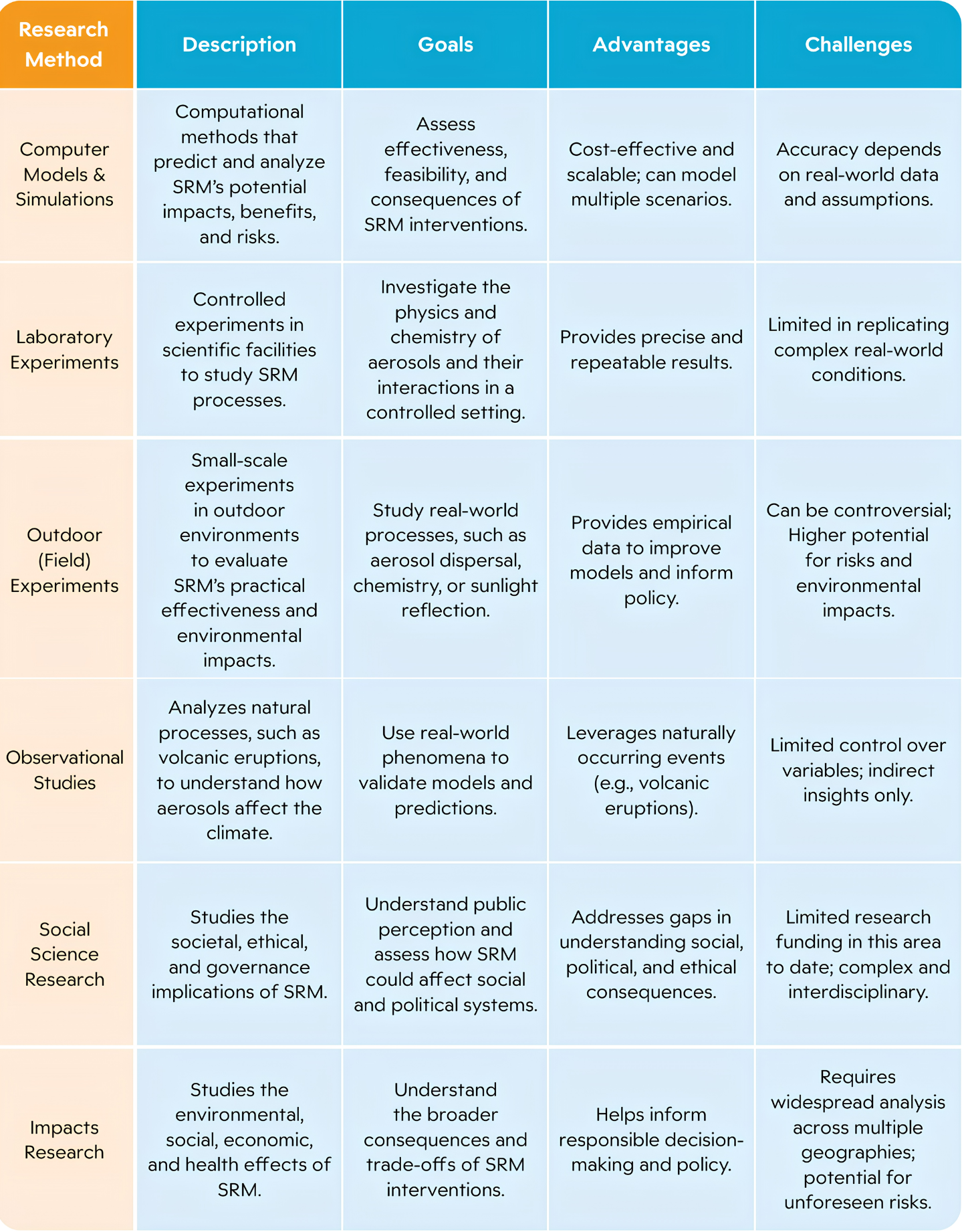
Solar geoengineering (also known as solar radiation modification or SRM) research is still in its early stages. Scientists broadly agree that before SRM is considered for deployment, its potential impacts must be better understood. Research spans multiple methods, each with specific goals, advantages, and challenges.
So far, most studies have relied on computer models to simulate SRM’s potential effects, but additional research methods—including laboratory experiments, fieldwork, social science research, and observational studies—are critical for improving models and understanding real-world impacts.
Research Methods
The Importance of Interdisciplinary Research
Understanding SRM’s full impact requires research across multiple fields. While climate science focuses on physical and chemical processes, studies on ecosystem health and social sciences explore how SRM might affect people, their livelihoods, and well-being. More attention to these areas is critical for evaluating whether SRM could be used responsibly and equitably.
A holistic research approach ensures that SRM is assessed comprehensively, considering both its potential benefits and risks. Ongoing interdisciplinary research will be critical in determining whetherSRM could play a responsible role in climate strategies while ensuring equitable and transparent decision-making

Subscribe to our newsletter
Stay connected with DSG — get the latest news and insights delivered to your inbox.