
The Physics of Reflecting Sunlight
Solar geoengineering relies on a fundamental principle of physics: reflecting sunlight back intospace to reduce Earth’s heat absorption. This process, known as the albedo effect, could cool the planet and offset some climate change impacts.
What is the Albedo Effect?
The albedo effect refers to how much sunlight a surface reflects. Bright surfaces, like snow and ice, have a high albedo, reflecting most sunlight, while dark surfaces, like oceans or forests, have a low albedo, absorbing more sunlight.
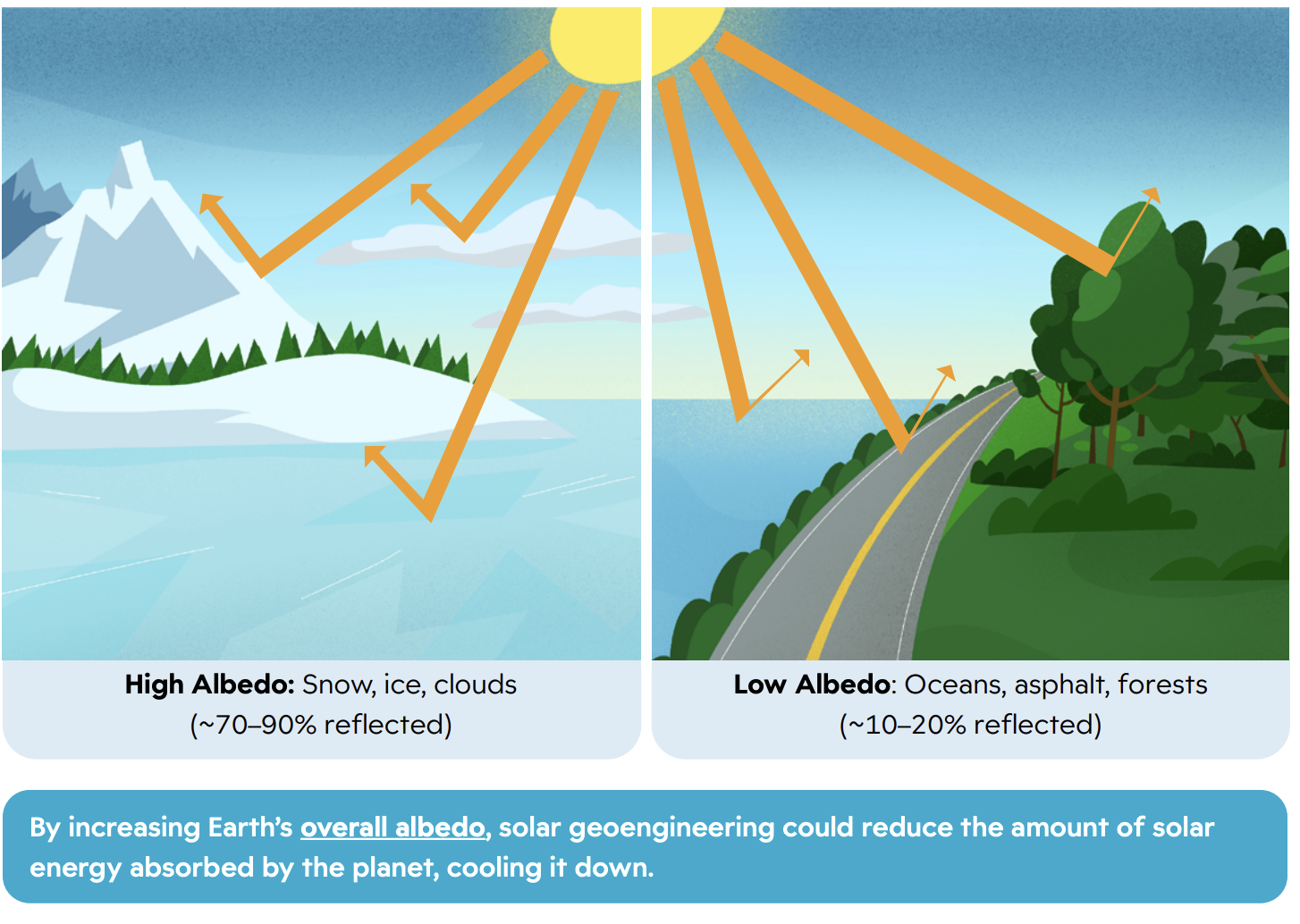
How Does Solar Geoengineering Work?
Solar geoengineering methods aim to enhance Earth’s reflectivity by mimicking or amplifying natural
processes. Here’s how the key approaches interact with sunlight:

What Happens to the Reflected Sunlight?
Sunlight reflected into space never enters Earth’s energy system, reducing heat trapped by greenhouse gases—the main driver of global warming. By reflecting sunlight, solar geoengineering effectively “turns down the heat” on the planet.
Limitations of Reflecting Sunlight
- Uneven effects: Cooling would vary, benefiting some regions more than others and potentially creating new risks or unintended consequences.
- Doesn’t Remove Greenhouse Gas Emissions: Solar geoengineering does not reduce atmospheric greenhouse gases, so issues like ocean acidification remain unresolved.
- Temporary Fix: If halted abruptly, temperatures would rebound quickly (“termination shock”).
Why Does This Matter?
Solar geoengineering is simple in principle but complex in execution. By increasing reflectivity, it could temporarily cool the planet, buying time for long-term solutions like emissions reductions and carbon removal. However, risks and uncertainties underscore the importance of continued research and careful consideration of impacts.
Reflecting sunlight may be one tool in climate strategy, but not a standalone fix. It must be studied alongside other climate solutions to fully understand its role.

Subscribe to our newsletter
Stay connected with DSG — get the latest news and insights delivered to your inbox.