
Tipping Points
What Are Tipping Points?
Tipping points are key thresholds in Earth’s climate system where small changes can trigger abrupt — and potentially irreversible — shifts in ecosystems, weather patterns, or environmental conditions. Once a tipping point is crossed, feedback loops can accelerate changes, making them difficult or impossible to stop, even if the initial cause is addressed.
Major Climate Tipping Points
Scientists have identified several key tipping points that are particularly vulnerable to human-driven climate change. These include:
- Ice Sheets Melting: Significant melting of the Greenland and Antarctic ice sheets contributes to sea level rise and could disrupt ocean circulation patterns, such as the Atlantic Meridional Overturning Circulation (AMOC).
- Amazon Rainforest Dieback: Deforestation and warming could push the Amazon rainforest past a threshold that induces large-scale collapse, releasing vast amounts of CO2 into the atmosphere.
- Permafrost Thaw: Permafrost contains large amounts of frozen organic material. As it thaws, methane and CO2 are released, amplifying global warming and creating a feedback loop.
- Disruption of Ocean Circulation: Changes in salinity and temperature could weaken or collapse major ocean currents, like the AMOC, affecting global weather, fisheries, and ecosystems, such as coral reefs.
- Changes in Monsoons: Billions of people rely on monsoon rains across Asia, Africa and the Americas; changes in atmospheric and ocean circulations may shift, weaken or diminish these seasonal wind systems that carry water with them to major global population centers.

Why Tipping Points Matter
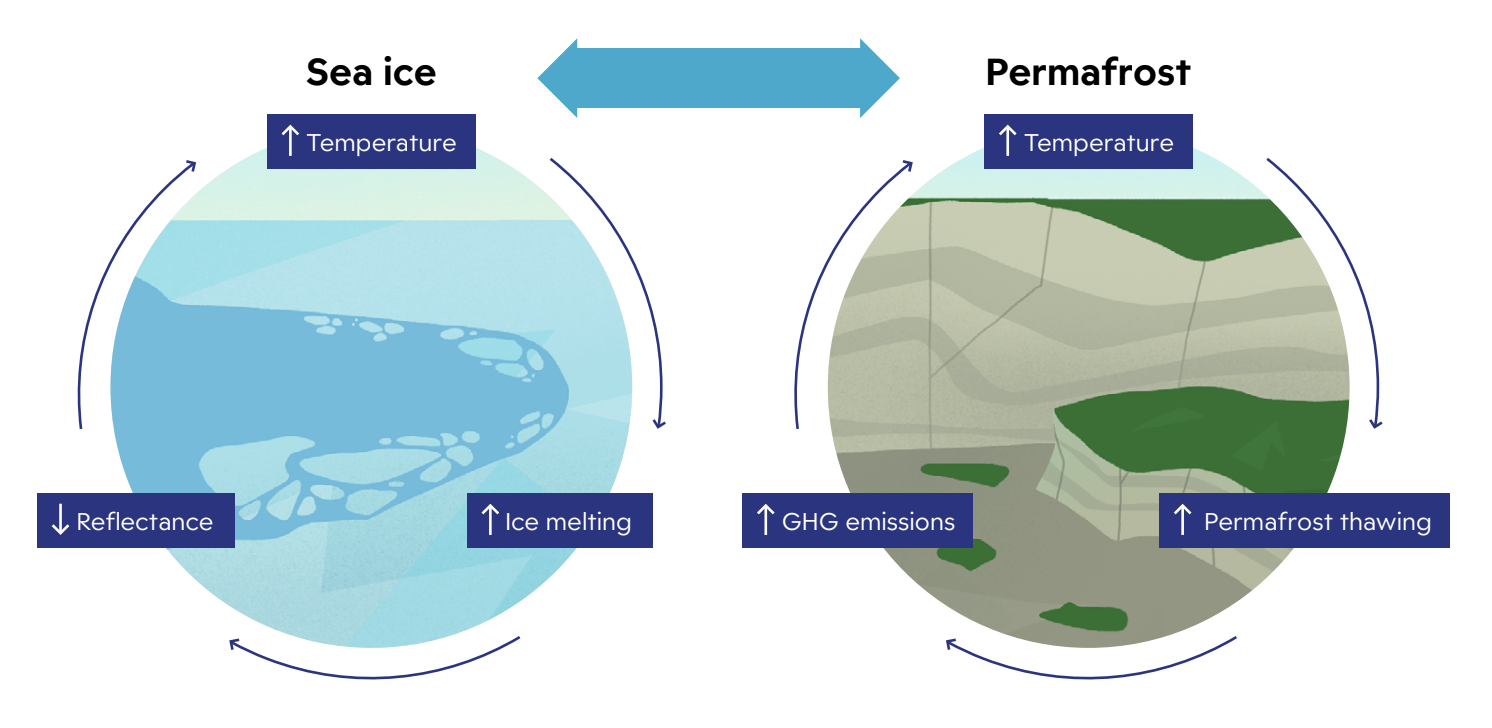
Crossing climate tipping points can trigger cascading effects through positive feedback loops – where one destabilizing change amplifies the next, creating a self-reinforcing cycle and compounding impacts. For example, the loss of Arctic sea ice reduces the Earth’s reflectivity (albedo) which leads to faster warming. This accelerated warming then causes permafrost to thaw more rapidly, releasing large amounts of greenhouse gases, which further intensifies global warming, continuing the cycle. The impacts of tipping points are not only environmental but also social and economic, with severe consequences for food security, water availability, and global stability.
Can Solar Geoengineering Help?
Solar geoengineering could potentially delay or mitigate some tipping points by temporarily reducing global temperatures. For example, approaches like stratospheric aerosol injection might slow Arctic sea ice loss, Greenland ice sheet melting, and permafrost thaw by cooling regional climates. However, solar geoengineering is unlikely to directly address tipping points like the Amazon rainforest dieback or disruption of ocean circulation, which are driven by factors beyond temperature, such as CO2 levels and ecosystem changes.
While solar geoengineering could provide a temporary reprieve in some cases, it does not replace the need for emissions reductions and carbon removal. Unintended consequences could also complicate its role in addressing tipping points, highlighting the importance of careful research, regulation, and integration into broader climate strategies.
Tipping points are a stark reminder of the urgency to act decisively on climate change, and while solar geoengineering may offer a complementary tool, it will never be a solution on its own.

Subscribe to our newsletter
Stay connected with DSG — get the latest news and insights delivered to your inbox.