
Solar Geoengineering Governance
As discussions around climate interventions grow, the prospect of solar geoengineering (also known as solar radiation modification or SRM) raises urgent questions about oversight, accountability, and global cooperation. While these approaches remain speculative and untested, their potential to impact the entire planet makes effective governance critical.

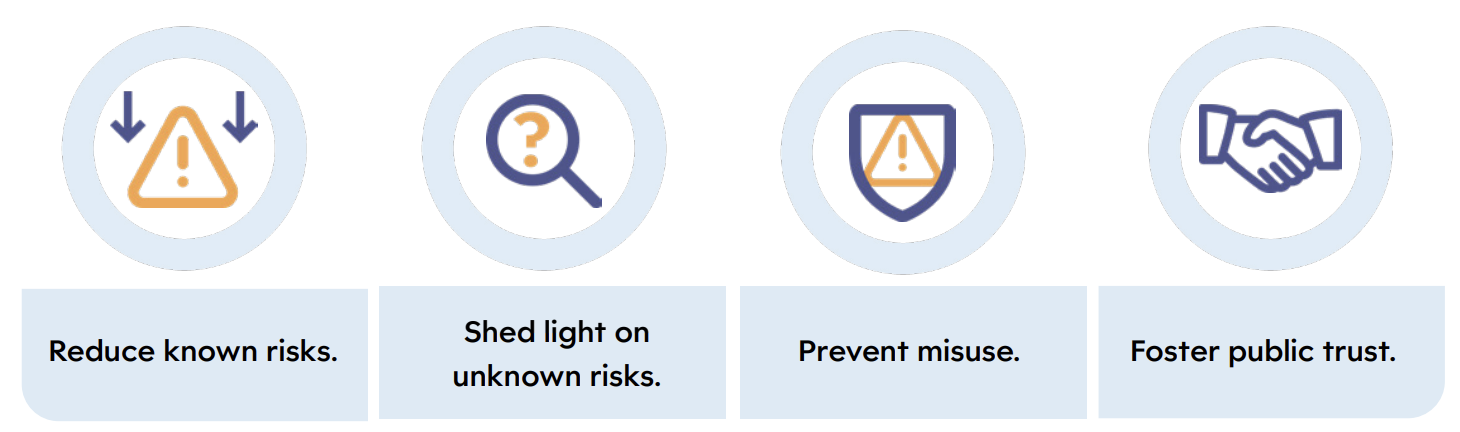
Effective governance can ensure that SRM research and potential deployment are guided by transparency, justice, and international cooperation. It could:
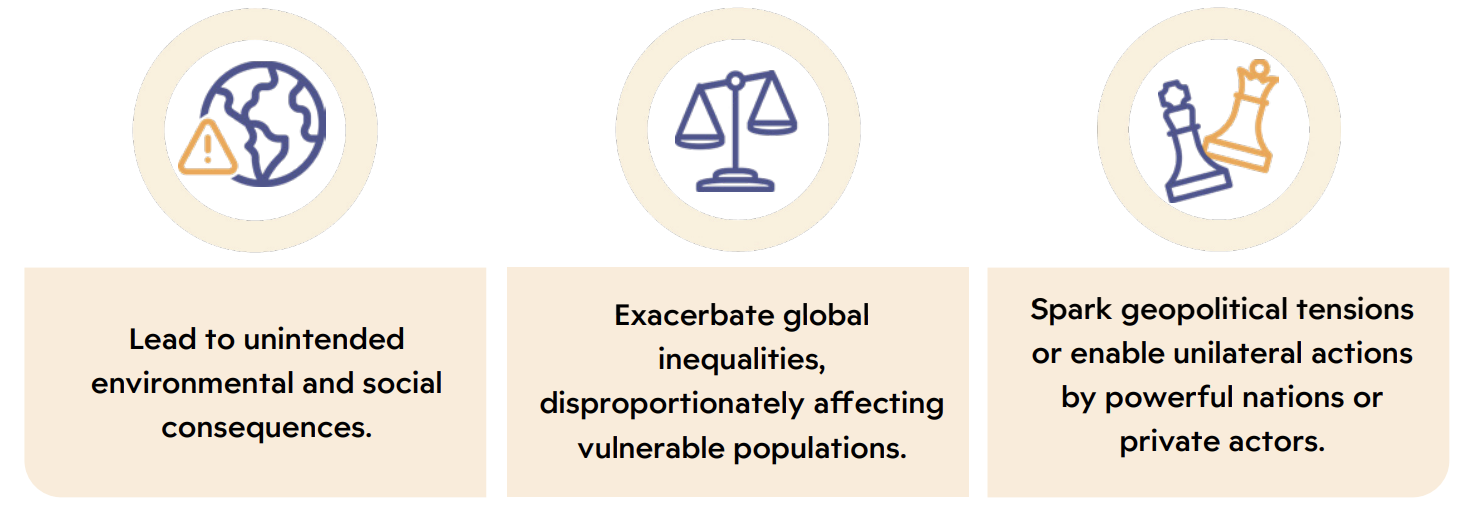
Without robust frameworks, SRM research and potential deployment could:
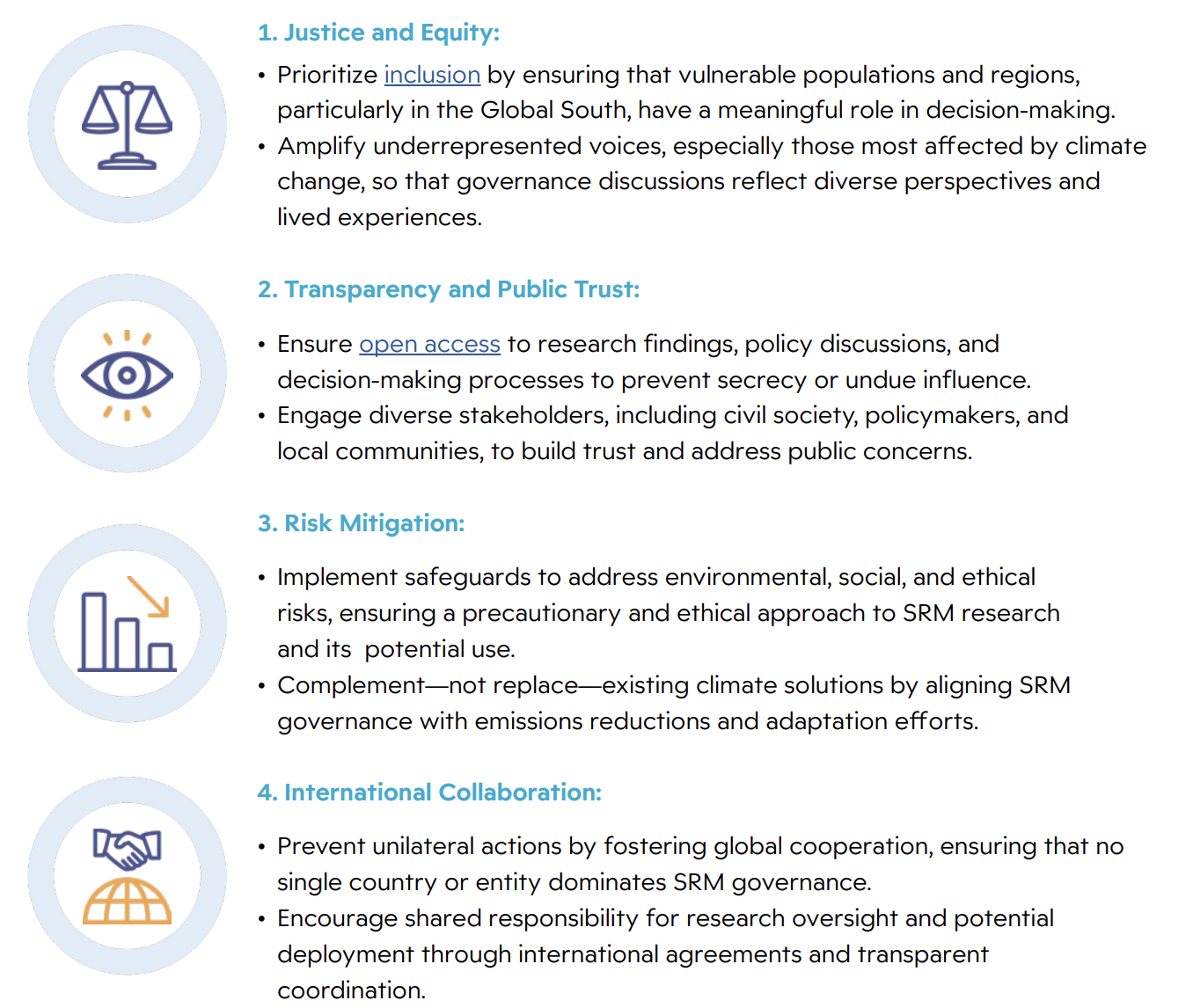
A well-designed governance framework would address key priorities to ensure that decision-making is inclusive, accountable, and aligned with broader climate goals.
Governance for research focuses on issues like transparency in data and funding, public engagement, and guardrails for small-scale experiments, while governance for deployment involves international coordination, risk assessment, and long-term oversight. Clear distinctions between the two are essential, as premature or poorly regulated research could undermine trust and global cooperation. Key governance themes around SRM must include:
An ideal governance structure would be proactive, adaptable, and inclusive, fostering accountability in SRM research and discussions while prioritizing climate justice and ethical responsibility. Additionally, given the lack of comprehensive assessments on SRM, a moratorium on deployment may be warranted, while the planet contends with ramping up research on SRM across multiple domains.
Ensuring inclusive governance?
Effective governance requires broad participation from diverse stakeholders, including historically marginalized communities, to ensure legitimacy and fairness. However, governance mechanisms often reflect existing power imbalances, where dominant actors – such as powerful states, corporations, and elite scientific institutions – set the agenda, potentially sidelining perspectives from the Global South and climate-vulnerable regions.
Inclusionary governance models emphasize transparency, public engagement, and procedural justice. Efforts such as citizen assemblies and global forums aim to integrate diverse voices into decision-making, ensuring that policies reflect a broad spectrum of interests and concerns.
Enabling vs Restrictive Governance
Governance can both help build activities or stop harmful action. For example, research governance is often only thought of only as restrictive measures focused on inhibiting irresponsible research.However, it’s important to remember that governance also means processes or actions that can enable better decision-making and better research. This could include actions that make it more feasible and for the research enterprise to be more inclusive. A few examples across both spaces include codes of conduct, civil society advocacy, and funding.

Subscribe to our newsletter
Stay connected with DSG — get the latest news and insights delivered to your inbox.