
How Human Rights Are Impacted by Solar Geoengineering
Human rights are the inherent rights that every person has simply by virtue of being human. They are universal, which means they apply to everyone, everywhere in the world.
Governments have obligations and duties under international, regional, and sometimes national law to respect, protect and fulfill human rights. When rights are violated, they also have the obligation to provide a remedy.
Solar geoengineering has the potential to impact human rights in many ways, both positive and negative. On the one hand, solar geoengineering might help mitigate harms associated with climate change, thus helping protect human rights. On the other hand, the unforeseen and uncontrollable consequences of solar geoengineering might cause conditions that would further threaten human rights.
Human rights can be grouped into three categories, all of which are impacted by solar geoengineering (also known as solar radiation modification or SRM) activities:

Procedural human rights:
Procedural human rights refers to a group of rights that ensure there are fair and transparent processes. Procedural rights are outlined in the U.N. International Convention on Civil and Political Rights (ICCPR), along with other legal documents.
These human rights include the right to information, to participate in public affairs, and to access legal remedies when human rights are violated:
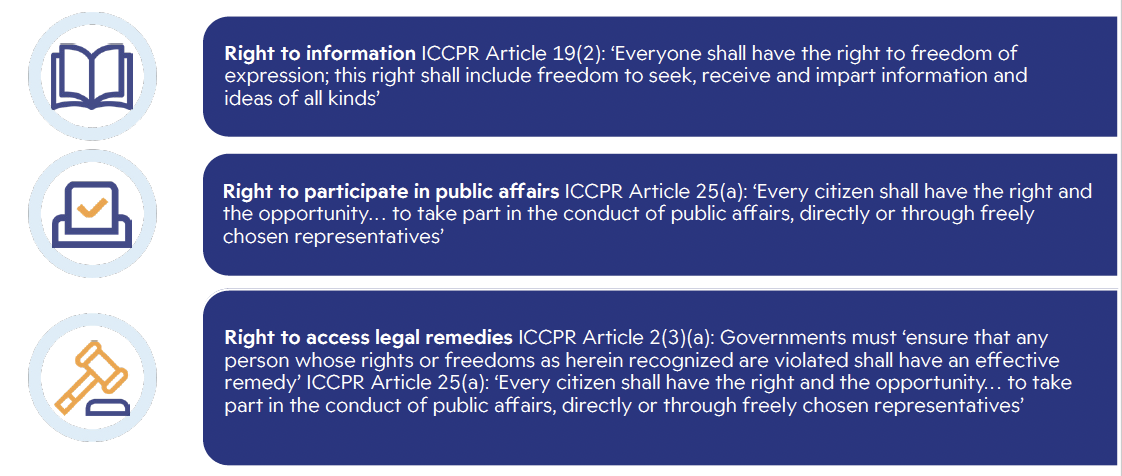
Procedural human rights includes a general right of access to information held by public bodies, especially information necessary to realise other human rights such as when a project has an impact on the environment. It also means that everyone may participate in public debate and decision-making, which directly relates to the rights of freedom of expression, assembly, and association. In the context of SRM, governments have a responsibility to ensure individuals have access to relevant information, and have the opportunity to participate in decisions about SRM that may impact their human rights. When their rights are violated as a result of any SRM activity, governments must also ensure individuals have the right to legal remedies without discrimination when their rights are violated or harm results from a solar engineering project.
How can research teams protect procedural rights?
- Provide access to relevant information
- Create opportunities for communities and individuals to deliberate and provide input on
project proposals - Respect communities’ decisions to approve or reject a plan
Substantive human rights
Substantive human rights are rights that protect an individual’s dignity and well-being.Substantive human rights are outlined in the U.N. International Convention on Civil and PoliticalRights (ICCPR) and the U.N. International Covenant on Economic, Social and Cultural Rights(ICESCR), along with other legal documents.
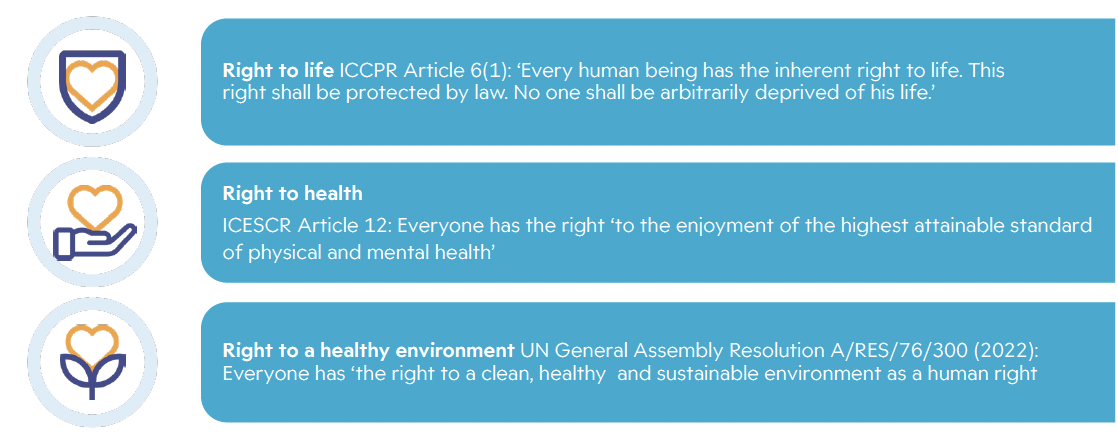
These human rights include the right to life, health, food, water, and a healthy environment.
Protecting or interfering?
SRM has the potential to enhance and undermine all of these rights. SRM that effectively mitigates climate change, resulting in a safer and more stable climate, would support these rights. However,SRM could also result in serious environmental impacts that directly or indirectly create life-threatening situations or harm to health and the environment. In many cases, SRM may bepositive for some while simultaneously harming others. Furthermore, failure to take an action likeSRM to mitigate the impacts of climate change can also undermine enjoyment of these rights as climate conditions worsen, resulting in greater environmental damage and harm to human health and life. Governments have an obligation to consider the impacts of any SRM activity on these substantive human rights and ensure that these rights are guaranteed and safeguarded.
How can research teams protect substantive rights?
- Conduct a human right impact assessment that considers both positive and negative impacts
- Take steps to reduce or prevent any foreseeable harm
Human rights related to scientific research
Scientific research rights are rights that relate to research and scientific development. These rights are outlined in the U.N. International Convention on Civil and Political Rights (ICCPR) and the U.N. International Covenant on Economic, Social and Cultural Rights (ICESCR), along with other legal documents.

Everyone has the right to enjoy the benefits of scientific progress, which would include the benefits associated with SRM. Governments must ensure all individuals can enjoy the benefits of science without discrimination, “particularly when they are instrumental for the enjoyment of other economic, social and cultural rights.”In the context of SRM, this may be particularly difficult to guarantee, as the impacts of SRM are largely unknown and are likely to affect regions of the world(and communities) very differently.
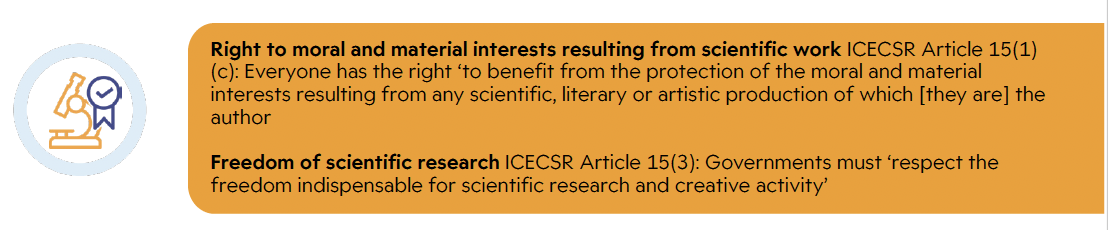
For researchers in particular, these rights include the freedom of scientific research, and the moral and material interests resulting from scientific work. This means that governments must protect the freedom needed for scientific research (e.g., protection from undue influence, freedom to “freely and openly question the ethical value of certain projects”, and freedom to cooperate with other researchers) and protect those interests created by scientific research, similar to intellectual property protection. In short, governments cannot place any arbitrary limitations on scientific research, including research for SRM.
Your Rights
Human rights are protected in international, regional, national and local law.
Every Government has an obligation to respect and protect everyone’s human rights, including the activities of private actors. This means ensuring that communities are consulted and provide their free, informed and prior consent ahead of any planned SRM activities, and ensuring that SRM activities are safe for you, your communities, and the environment.’

Subscribe to our newsletter
Stay connected with DSG — get the latest news and insights delivered to your inbox.